Start with the label, then ask what it leaves out
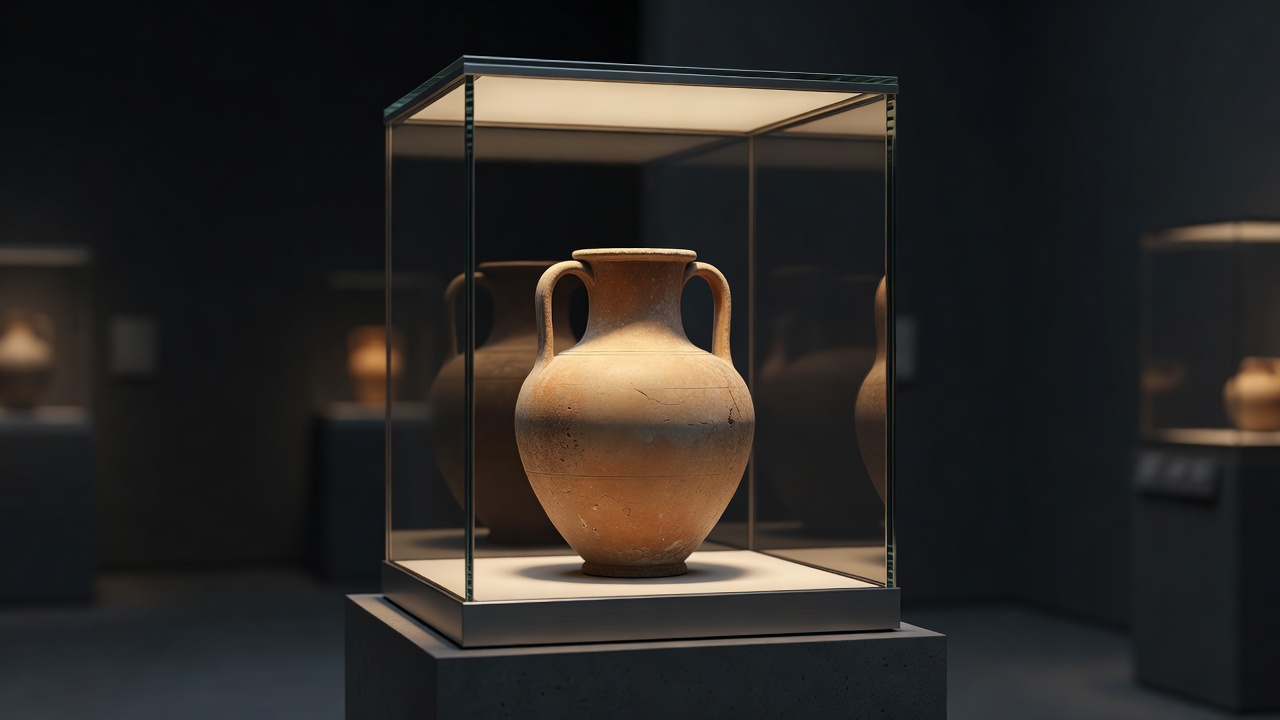
A ceramic bowl in a museum case may carry a place and a date, but those words can describe different things. The place might be a production region, a findspot or a former collection. The date might refer to manufacture, burial or an art-historical comparison. Before using the bowl to reconstruct trade, identify which claim the label actually makes and whether a catalogue record supplies the supporting information.
The distinction between provenance and provenience is helpful, although usage varies. Provenance commonly concerns ownership history; provenience often means the archaeological find location and context. Both matter. A documented ownership chain does not restore an unknown excavation context. Conversely, a well-recorded find still needs an ethical and legal account of how it entered a collection.
Context turns a thing into evidence
Archaeologists record relationships between deposits, structures and objects. A bowl recovered from a sealed deposit can answer different questions from one found on an eroded surface. Even a sealed context is not a simple time capsule: older material may have been reused or redeposited before the deposit formed. Interpretation depends on understanding how that context accumulated and whether it was disturbed.
This is why a spectacular unprovenanced object is often less informative about a route than a modest group of well-recorded fragments. Associated material, stratigraphy and environmental samples can help establish chronology and activity. Removing an object without recording those relationships destroys information that cannot be recovered by a later laboratory test or an attractive photograph.
Production date is not arrival date
Different dating methods answer different questions. Radiocarbon analysis estimates the age of suitable organic material and requires calibration and contextual interpretation. Ceramic typology compares forms and fabrics with established sequences. A coin may provide a date after which a deposit formed, but it could have circulated or been kept for a long time before deposition. Precision belongs to the method and sample, not to the confidence of the storyteller.
A useful reading habit is to write down three possible dates: when the object was made, when it moved and when it entered the recovered context. Frequently only one or two can be constrained. A broad range is not a failure of scholarship. It is an honest description of what the evidence can currently support.
Materials can suggest origins, not biographies
Petrographic and chemical studies can compare ceramics with raw materials or production groups. Isotopic and other scientific methods can illuminate selected questions about materials, food or mobility when suitable samples and reference data exist. These techniques are powerful, but their conclusions depend on sampling, comparison and uncertainty. A laboratory result does not remove the need for archaeological reasoning.
Even a persuasive production attribution does not identify a carrier. A vessel might travel as cargo, personal property, a gift or an old possession. Multiple exchanges can connect its production area with its final findspot. Inferring a direct route or the ethnicity of a merchant requires evidence beyond the material signature of the object itself.
Make independent sources meet carefully
A written record can name a commodity, while botanical remains show that a related plant was present at a site. Together they may strengthen an argument, but only if their dates, locations and identifications are compatible. General resemblance is not corroboration. Two modern books repeating the same early claim are also not two independent witnesses.
Disagreement is worth preserving. A text may use an unfamiliar place-name, an inscription may have a disputed reading, or a find may belong to a later deposit than first believed. Rather than choosing the most dramatic version, trace the disagreement to its basis. Sometimes the correct conclusion is a narrower claim: exchange occurred, but the precise mechanism remains unresolved.
Keep the ethical question beside the historical one
Looting, undocumented collecting and the sale of supposedly ancient objects damage the record and can harm communities. This atlas does not provide instructions for finding, removing or purchasing antiquities. If you encounter possible archaeological material, leave it undisturbed and follow the guidance of the relevant local heritage authority. Public access and photography rules also vary by site.
The final test is simple: can a reader see which part of an account is observation and which part is inference? An engaging historical narrative does not need to erase that boundary. The surviving fragment is already remarkable. Its limits are part of its story, not an obstacle to enjoying it.
Uncertainty file: does scientific testing settle every dispute?
No. Testing addresses defined questions and depends on sample quality, reference data and context. Results can narrow a debate without resolving the whole historical interpretation.